Everything You Need to Know About Slimline Rainwater Tanks
How slimline tanks fit into tight spaces without giving up capacity: materials, sizing, placement, and the maintenance they need.
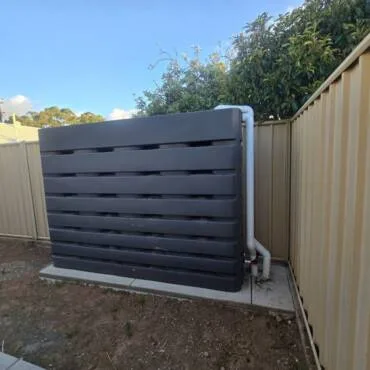
Slimline rainwater tanks make rainwater harvesting practical on properties that simply do not have room for a round tank. This guide covers how they work, what to look for when choosing one, and what keeps them running well.
What is a slimline rainwater tank?
A slimline rainwater tank is a narrow, compact storage unit designed to collect precipitation from roofing systems and gutters. These tanks feature a slim configuration that allows installation in confined spaces, making them ideal for urban properties with limited outdoor areas. Construction materials typically include polyethylene, steel, or Colorbond steel for durability against corrosion and UV exposure.
Available capacities range from 450 litres to 5,000+ litres, providing substantial water storage despite their narrow footprint.
Why choose a slimline rainwater tank?
1. Space efficiency
The narrow profile enables placement along building sides, under decks, or in tight spaces without sacrificing yard usability — particularly valuable in urban settings.
2. Aesthetic appeal
Unlike bulky traditional tanks, slimline models feature sleek rectangular designs available in multiple colours, including Colorbond steel options that complement property aesthetics.
3. High-capacity water storage
Despite their slim design, these tanks offer significant capacities suitable for garden irrigation through to large household applications.
4. Durability and longevity
Most slimline tanks are UV-resistant and corrosion-resistant, ensuring they will last for years without deteriorating due to exposure to sunlight or the elements.
5. Eco-friendly and sustainable
Rainwater harvesting reduces mains water dependence, lowering utility expenses while supporting environmental conservation efforts through decreased water wastage.
6. Low maintenance requirements
Regular surface cleaning and gutter maintenance ensure collected water remains debris-free with minimal upkeep demands.
How does a slimline rainwater tank work?
Precipitation collected from roofing flows through guttering and downpipes into storage tanks. Systems typically integrate with household plumbing, enabling water use for toilet flushing, irrigation, and laundry applications. Tanks can supplement primary water supplies, reducing overall household consumption.
Key factors to consider when choosing a tank
1. Capacity
Selection depends on intended use — smaller tanks suit garden watering, while household applications require larger storage based on roof size, consumption patterns, and regional rainfall averages.
2. Material
Polyethylene tanks offer lightweight durability and UV resistance at lower costs, while Colorbond steel provides superior strength and weather resistance with extended lifespans.
3. Placement
Positioning near downpipes maximises water collection, while considering obstructions from trees or structures that might limit rainfall access or maintenance accessibility.
4. Budget
Polyethylene options cost less than steel alternatives, though steel may provide superior longevity justifying higher initial investment when evaluating total lifecycle expenses.
Maintenance tips
- Clean the tank: Periodically inspect and remove debris, leaves, or dirt accumulation from surfaces to ensure collected water remains contaminant-free.
- Check for leaks: Examine tanks for developing cracks or leaks that compromise structural integrity and cause water loss. Address identified issues promptly through professional repair.
- Maintain gutters and downpipes: Keep guttering systems clear of debris to allow unobstructed rainwater flow into tanks, preventing overflow or blockages that reduce collection efficiency.
- Ensure proper water filtration: Install appropriate filtration mechanisms removing leaves and particles before water enters storage to maintain water quality.
Conclusion
Slimline rainwater tanks represent practical, space-conscious, and environmentally responsible water collection solutions for residential and business properties. Their compact designs, visual appeal, and reliability make them suitable options for property owners seeking reduced water consumption, lower utility costs, and sustainable practices. Selecting an appropriate tank size, combined with consistent maintenance, ensures long-term access to a renewable water supply.
This guide was produced by the KC Resources & Services team in Australia. Where it refers to regulations or standards, these apply to Australia. Please confirm the requirements that apply in your own location.